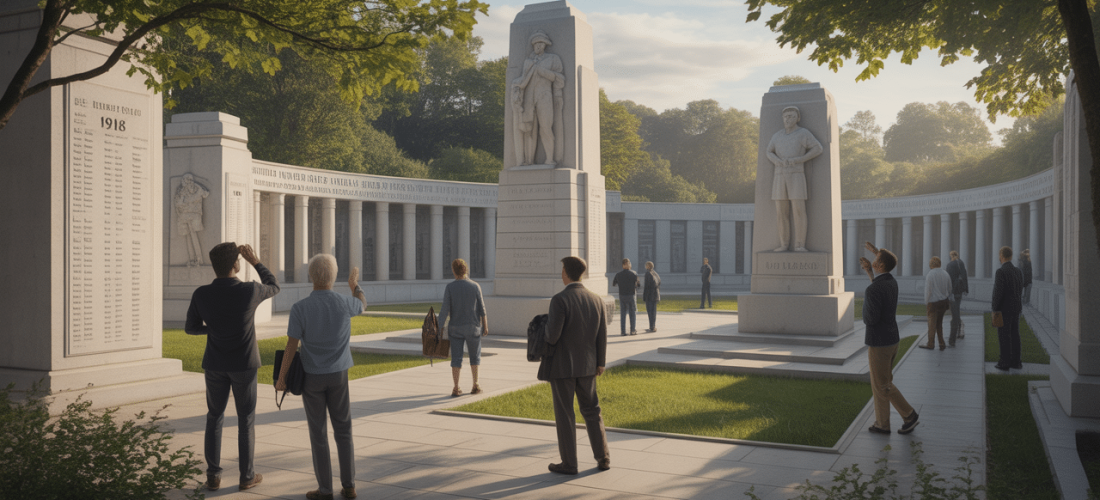
World War I, a tragic conflict that left an indelible mark on history, is commemorated through numerous memorials scattered across the globe. Each site inscribes memories of bravery and sacrifice, a tribute to the millions of soldiers and civilians affected by the horrors of war. These memorials are not merely stone structures; they represent stories of war, loss, and peace, silent witnesses to the conflicting events that shaped the 20th century.
Table of Contents
ToggleWar Memorials: Symbols of Eternal Remembrance
War Memorials are poignant illustrations of sacrifices made by generations. Built to preserve the memory of those who lost their lives in combat, every stone, every inscription tells a unique story. These monuments can be found in almost every town affected by the war, but some stand out due to their size, art, and symbolism.
- The Verdun Monument: Erected to commemorate the iconic Battle of Verdun, it symbolizes the heroism and resistance of French soldiers.
- The Canadian Vimy Monument: An architectural masterpiece, it honors the sacrifices of Canadians during the war.
- The Peace Memorial: A symbol of reconciliation, it embodies the long-awaited desire for peace after so much suffering.
These edifices are often surrounded by military cemeteries, where the bodies of soldiers fallen in the line of duty rest. The Military Cemetery of La Targette, for example, houses hundreds of graves paying tribute to soldiers who fought in this region. The surrounding landscape then becomes a path for reflection, prompting each visitor to contemplate the sacrifices of human beings for a greater cause.
Memorial Paths: Walking Through History
The Memorial Paths are tourist routes that allow people to retrace the history of battles, discover strategic sites, and understand military challenges. These itineraries are mapped out in regions where the war raged, such as Verdun, where the Verdun trenches are still visible, witnesses to the fierce fighting that took place here.
The Memorial Paths itinerary may include different types of stops:
- Battlefields: where visitors can feel the magnitude of the sacrifice.
- Dedicated museums: like the Musée de la Grande Guerre, which offers exhibitions rich in artifacts and testimonies.
- Monuments: each with its own inscription and a story to tell.
Traversing these paths offers an opportunity to meet the past, to immerse oneself in stories of war and reconciliation. These routes are designed to foster reflection and empathy, enabling everyone to connect emotionally with the lives broken by this conflict.
Perpetuating Memory through Education and Culture
Memorials play a major role in educating future generations. Through visits to sites of memory, educational projects, and online resources, the memory of the war is constantly revitalized. War stories are not only accounts of the past; they give meaning to current events and raise awareness of the importance of peace.
Schools often organize visits to these memorials, for example:
- Guided tours: with historians who can depict crucial events and iconic figures.
- Workshops and seminars: to encourage young people to reflect on the concept of war.
- Art projects: encouraging students to express their understanding of history through art.
A notable example of these initiatives is the Souvenir Français project, which aims to sensitize young people to French history and the sacrifices of World War I. This project encourages students to engage, to honor the resistant fighters, and to perpetuate the memory of the fallen.
The Role of Museums in Preserving Memories
Museums, such as the Musée de la Grande Guerre, display period objects, uniforms, soldiers’ letters, and testimonies, allowing the often dry chronological narrative of military history to be humanized. Through these artifacts, visitors have the opportunity to understand the soldiers’ experiences, their fears, and their hopes.
A summary table of the roles of museums:
| Role | Description |
|---|---|
| Documentation | Preserving period artifacts for future study. |
| Education | Training young generations to understand historical heritage. |
| Commemoration | Establishing a space to remember and honor victims. |
At the Crossroads: Heritage and Collective Memory
The memory of World War I is not only a duty of remembrance, it is a living heritage. Memorials and memory paths are bridges between eras. They remind us that the lessons of history must not be forgotten but, on the contrary, integrated into the values of contemporary society.
The Challenges of Memory in the Present Time
In a world evolving at a frantic pace, maintaining the remembrance of past events is a real challenge. New generations, often disconnected from war stories, can feel detached from this history. This underlines the importance of initiatives aimed at making memory accessible and relevant. Interactive visits, documentaries, and digital projects offer a more modern and engaging approach to history. It is crucial that these war stories do not become mere anecdotes but remain alive in the collective consciousness.
A list of modern initiatives to preserve memory:
- Heritage applications: enabling digital exploration of historic sites.
- Documentaries and films: capturing the public’s attention through immersive narratives.
- Interactive workshops: involving testimonies of veterans’ descendants.
Commemorations Around the World: United in Remembrance
World War I memorials are found not only in France but also throughout Europe and beyond. Each country has shaped its own symbols to honor its heroes. Commemorative ceremonies take place every year in November, marking the Armistice, reinforcing the message of peace that remains so fragile.
Here is a selection of notable international memorials:
- The Tyne Cot Memorial in Belgium, the largest Commonwealth military cemetery.
- The Canberra War Memorial in Australia, a majestic site dedicated to Australian soldiers.
- The Unknown Soldier Memorial in London, held in memory of all unknown soldiers.
With each passing year, the importance of these memorials and the necessity to honor these sacrifices remain more relevant than ever. Because beyond stones and inscriptions, these places embody a call for peace, reconciliation, and understanding among peoples.
World War I memorials are places that offer us a view of our shared past. They teach us the importance of remembering, respecting sacrifice, and working for a better future, far from conflicts.