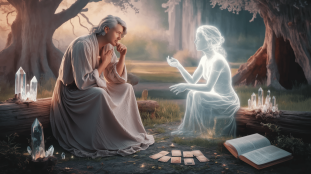
The question of what happens after death plunges humanity into an abyss of reflections and emotions. Each culture, religion, and philosophy offers a distinct vision of the afterlife, fueling passionate debates and personal quests for meaning. Tragic events and irreparable losses often lead individuals to turn to spirituality in search of answers. The notion of heaven, hell, and reincarnation awakens deep questions about the journey of the soul and the experiences related to it.
Table of Contents
ToggleReligious beliefs about life after death: a spiritual journey
The various religious traditions offer a multitude of perspectives on the phenomenon of death. In Christianity, for example, the idea of redemption and the last judgment occupies a central place. Believers envision an eternal paradise where virtuous souls reside in the presence of God, while sinners may be condemned to hell, a place of suffering and spiritual isolation. These visions are deeply rooted in sacred texts, such as the Bible, and influence the ethical and moral behaviors of the faithful.
In Hinduism, reincarnation is a key to understanding the cycle of life and death. According to this belief, the soul, or “atman,” passes through multiple incarnations based on the actions committed in past lives, a principle known as “karma.” This journey of transformation continues until the soul reaches enlightenment and is freed from the cycle of reincarnation, then joining nirvana.
Confirming these various points of view, several studies on near-death experiences (NDEs) provide fascinating insights. These experiences, reported by many people who have come close to death, describe a feeling of unconditional peace, encounters with luminous beings, and sometimes a glimpse of life events, as if the soul takes a pause to reflect on its journey before continuing its voyage in the beyond. These accounts often transcend cultural and religious barriers, raising the possibility of a universal experience.
Buddhist teachings: the illusion of the ego
Buddhism presents a radically different perspective by emphasizing the illusion of the ego and the importance of meditation to reach awakening. In this tradition, death is not considered an end but a transition. Buddhists believe in the cycle of rebirths, which reflects the impermanent nature of all existence. The path of Dharma offers meditation practices to help individuals develop increased awareness of their actions, thoughts, and interrelations. Ultimately, the ultimate goal is to attain the full realization of no-self, thus invoking a deeper understanding of life beyond physical existence.
This aligns with how Westerners also conceive the death process. Many psychologists and researchers are interested in how beliefs about life after death may influence our daily behavior. For example, those who believe in reincarnation may be more inclined to practice compassion toward their fellows, considering each interaction as an opportunity to accumulate good karma. This is highlighted today in children’s education, where stories about respecting all lives are integrated, contributing to a culture of kindness.
- Belief in redemption after death
- Cycle of reincarnation and karma
- Illusions and awakening according to Buddhism
- Influence of beliefs on daily behavior
Mediumistic communications: a bridge to the beyond
The practice of mediumship, often seen as a way to communicate with the departed, offers a fascinating glimpse of life after death. Mediums say they receive messages and energies from souls, providing comfort and understanding to those who remain. Some people have testimonials of being helped in their mourning process through mediumistic sessions that open the door to dialogues with loved ones. These ventilation experiences play a crucial role in emotional healing.
These exchanges are often accompanied by a surprising revelation, suggesting that the departed continue to exist in a different form, bringing a message of love and comfort. In this context, it is interesting to note that mediums do not consider themselves as “seers” in the traditional sense, but rather as facilitators who help souls convey their messages clearly and empathetically.
Drawing from the archives of NDEs, we find a taste for experimentation and knowledge of the various incarnations of the soul. The notion that spiritual energy remains connected even after death opens a field of possibilities. Many people share accounts of paranormal events, such as visions, dreams, or sensations of a presence, thus illustrating the idea that the spirit can endure long beyond bodily death.
Signs from the beyond: messages of love
The signs left by the deceased can manifest in various forms. These emotional manifestations often affect those who are grieving. For example, feathers appearing without an obvious reason, familiar objects moving, or subtle changes in atmosphere sound like communications from beloved souls. A common practice among mediums is to encourage relatives to remain open to these signs, which can vary from one individual to another, ranging from simple dreams to more poignant visions.
It is crucial to recognize that these communications, although often perceived as coincidences, are important elements of the mourning process. Families may find meaning in these experiences, reinforcing the idea that love never dies; it simply transforms. A table may illustrate the different types of signs perceived by relatives:
| Type of sign | Description |
|---|---|
| Feathers | Unexpected appearance, often associated with a spiritual presence |
| Moved objects | Unexplained changes, symbols of presence |
| Apparitions | Visions of the loved one, often in moments of need |
| Dreams | Messages encountered during sleep, often bearers of peace |
The scientific dimensions of the beyond: near-death experiences
Near-death experiences have become a prominent subject of contemporary scientific research. Many doctors and researchers examine these fascinating testimonies that describe extreme sensations of peace, light, and unconditional love. These accounts often challenge conventional norms of biology and neurology, sparking debates about the nature of consciousness and its link to spirituality.
In 2013, a well-developed study conducted by Dr. Sam Parnia analyzed different experiences of clinical death. The results showed that 18% of patients who survived cardiac arrests reported near-death experiences. These testimonies include precise details about events that took place beyond their bodies, sweeping away skepticism and opening the way for further investigations.
The way the brain interacts with these spiritual states raises exciting questions. For example, scientists are beginning to explore quantum thermodynamics and its potential links with our consciousness. If human consciousness is indeed a form of energy, then perhaps after death, it can continue to express itself in a way we have barely begun to understand.
- NDE testimonies: common experiences and emotional healing
- Exploration of states of consciousness
- The dynamic between science and spirituality
- The role of mediums in interpreting messages
Ethical and philosophical implications
The implications of this research on life after death affect various aspects of human life. Some specialists point out that realistic spirituality can provoke an improvement in interpersonal relationships. Knowing that life continues after death can lead individuals to make better decisions regarding their behavior and interactions with others, cultivating compassion, love, and respect.
It is also important to question the philosophical implications around mortality. The notion of continuity of the soul post-death pushes us to rethink ethical realities. How to live a fulfilling and meaningful life when every interaction could influence our soul’s path? This raises the need to forge more empathetic communities, where values of sharing and mutual support intensify.
Personal perspectives and reflections: acceptance of the unknown
In order to live in harmony with the idea of death and the beyond, it is essential to cultivate acceptance. Every loss remains a moment of intense pain, but different beliefs and experiences can help apprehend death as a transition rather than an end. Mourning often involves accepting that each person sees the world through a unique prism. Stories of lost souls or incarnations can shape cultural and personal narratives that define us and illustrate the diversity of beliefs about the soul’s journey.
Navigating the tumultuous waves of life, it is beneficial to integrate spiritual practices, such as meditation or prayer, in order to connect to the invisible forces around us. These rituals can facilitate an inner dialogue with our soul. Spiritual solutions to overcome the fear of death also encourage considering the light, while remaining aware of the pains and struggles of the living.
- Meditation for inner peace
- Recognition of emotions experienced in mourning
- Accepting uncertainty with love and hope
- Cultivating spiritual bonds for healing