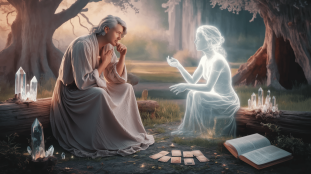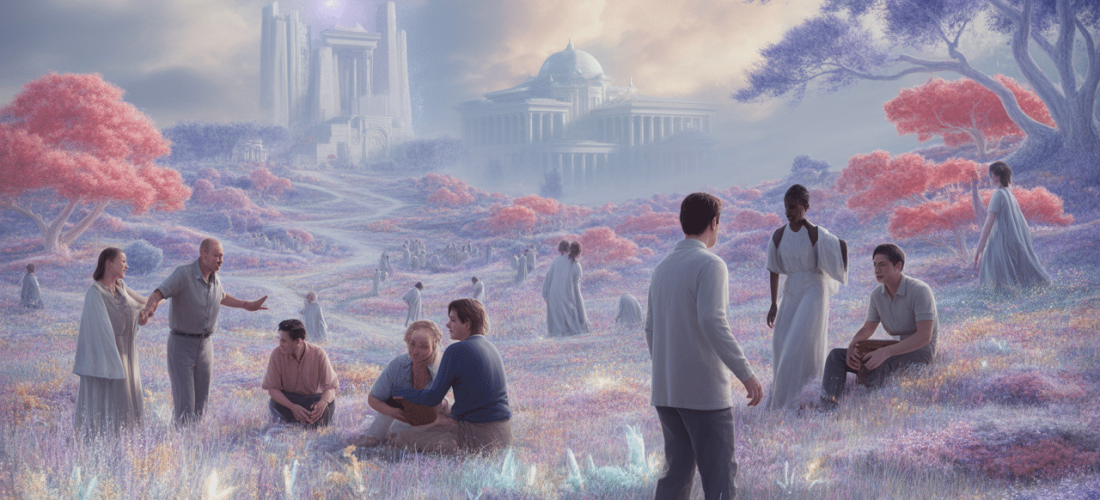
Beliefs about the afterlife have always inspired fascination and mystery throughout the ages. The question of what happens to our loved ones after their departure remains a delicate subject, often filled with emotions. Many spiritual and cultural traditions agree on a fundamental point: the deceased, far from disappearing, might continue to engage in rich and meaningful activities in the afterlife. This article delves into the supposed activities of these souls, through various beliefs and testimonies, thus illuminating this mysterious world.
Table of Contents
ToggleThe activities of the deceased: Cultural and spiritual perceptions
From ancient times, different cultures have developed a unique vision of the afterlife, which has deeply influenced their rituals and philosophy of death. The Egyptians, for example, believing in life after death, embalmed the bodies of their deceased and buried them with offerings to accompany them in the afterlife. Their Book of the Dead contained instructions on how to navigate the afterlife, and many artistic representations depict the deceased participating in eternal banquets.
In the Christian tradition, the notion of judgment after death is also central. Souls are then sent either to heaven or hell, depending on their conduct during their earthly life. Beyond these judgments, some beliefs suggest that souls can interact with the world of the living through spiritual manifestations. These communications, often reported by mediums, testify to the unfinished desires of the deceased.
In Asia, Buddhism also presents a fascinating perspective. Souls are perceived as undergoing a cycle of reincarnation, in which they must evolve through different forms of life until reaching Nirvana. The activities of the deceased in this context may include the accumulation of merits, often through rituals dedicated in their honor, emphasizing the idea of the continuation of existence.
- Egyptian funeral practices: Embalming and offerings.
- Christian vision: Judgments, heaven, and hell.
- Buddhist beliefs: Reincarnation and merits.
Spiritual manifestations: a constant link with the world of the living
In many cultures, the notion of “manifestations” by the deceased is often mentioned. These actions can appear in dreams, material signs, or events that seem impossible to explain by logic. Mediums frequently report experiences where they received messages, warnings, or even comforts from departed souls. These exchanges become emotional bridges, allowing the living to feel connected to the Essence of Yesteryear.
Narratives abound of people having received dreams from recently departed loved ones. These dreams, often called “Afterlife Dreams,” become carriers of inner peace for those who remain. They convey essential messages, ranging from simple reassurances to precise instructions on unfinished matters. These manifestations encourage the living not to forget, but also to celebrate life after death.
| Type of Manifestation | Examples | Impact on the living |
|---|---|---|
| Ten manifestations | Apparitions, dreams, moved objects | Comfort, understanding |
| Messages sent by mediums | Messages of peace, advice | Emotional support, guidance for the future |
The Messengers: through evolving mediations
What if the deceased acted as Messengers for those who continue to live? Mediums play a crucial role in this dynamic. Through proven methods, such as meditation or talking circles, they facilitate exchanges between worlds. These spiritual encounters allow those seeking communication to access the wisdom and emotions of departed souls, thus deepening the understanding of their journey.
Experiences of communication with the deceased, often experienced as clarifications, often have profound repercussions. Relatives discover unsuspected truths about the personality of the deceased, revelations about their journey, or elements revealing unresolved pains. This is what one might call spiritual vibrations, linking the emotions of the living with those of the departed souls.
- Use of symbols: Plants, numbers, colors.
- Positive influence: Encouragement to move forward in life.
- Healing process: Reconcile the past with the present.
The accompanying and guiding activities of the deceased
The presence of the deceased is not limited to passive interactions only. Indeed, some beliefs have expanded the vision of the deceased as spiritual guides. In cultures such as that of Native Americans, ancestors watch over and offer guidance to younger generations. In this context, Beings of Light help with decision-making and orientation on life paths.
Rituals dedicated to ancestors, such as Día de los Muertos in Mexico, emphasize the celebration of lived lives rather than mere commemoration of death. It is a time of reunion where families gather to honor those who have left them, demonstrating that the deceased continue to live through their memories and cultural influences.
| Tradition | Activities of the deceased | Meaning for the living |
|---|---|---|
| Día de los Muertos | Offerings, prayers | References to life and memory |
| Native American rituals | Spiritual guidance | Life force and wisdom |
Heavenly Memories and reflections on death
Beyond the activities observed in the deceased, there is also the question of the memories they leave behind. Souls can also become reservoirs of Heavenly Memories, moments charged with love and emotion, solidifying a vital link between the past and the present. In this dynamic, each memory can become a source of inspiration for those who remain, thus leading to introspection on life and death.
The essential quest for meaning around death also leads the living to integrate the lessons of the departed. Death can be an open door to deep discussions within families, transforming a painful experience into an opportunity for exchanges and reflection. By making room for shared memories, the living are invited to remember and to pass on the wisdom gained through these trials.
- Importance of memories: Nourish collective memory.
- Shared emotions: Create family bonds and rituals.
- Therapeutic use: Tools for mourning.
The mysteries of souls: perpetuating stories
In this exploration of the activities of the deceased, the mysteries of souls emerge as a common thread, reminding us that every story deserves to be told. Life stories do not end with death; they continue to live through memories and shared narratives. People who have had shared experiences with the deceased pave the way for a rediscovery of their essence, allowing the stories to be revisited and better understood.
Through this lens, the living become the narrators of these stories, contributing to the eternity of souls. Indeed, every victory, failure, and aspiration shapes the stories of the deceased, becoming reflections on the human condition. It is in this blend of humanity and spirituality that the reflections of infinity emerge, encapsulating both transcendence and the continuity of lives.
| Elements of memory | Examples | Impact on mourning |
|---|---|---|
| Life stories | Family tales, traditions | Promote emotional healing |
| Shared lessons | Advice, reflections | Strengthen family bonds |