Table of Contents
ToggleGuided Meditation: A Journey Toward Emotional Grounding
Guided meditation presents itself as an effective method for anyone seeking to strengthen their emotional grounding. In an often tumultuous world, this practice allows one to harmonize with their emotions, soothe the mind, and achieve an increased mental presence. Meditative techniques are varied and may include conscious breathing exercises, visualizations, and affirmations. These tools are very useful for navigating the ups and downs of daily life.
Guided meditation helps us learn to center ourselves on our body and sensations. The guide’s voice directs us, brings us back to the present moment, and helps cultivate emotional harmonization. A good example of guided meditation can be found in sessions that use visualizations around natural elements, such as water or earth, which represent stable and comforting forces.
Many people incorporate this practice into their daily routine for effective stress management. Whether it is to start the day on a positive note or to end the day by disconnecting from accumulated tensions, guided meditation offers a wide range of options. To observe tangible results, it is advisable to practice regularly. It is a true investment in oneself, a path toward lasting peace of mind.
The Importance of Healthy Emotional Grounding
Healthy emotional grounding is essential to maintain balance in life. It allows one to feel less disoriented by external events. Guided meditation plays a key role in developing this grounding ability. Thanks to it, individuals learn to connect with their emotions without being overwhelmed. For example, during periods of anxiety, a moment of guided meditation can help refocus the mind and reduce tension.
When addressing the issue of emotional grounding, it is important to recognize that it relies on a deep connection with oneself. Meditation techniques, particularly through the use of breathing rhythms, offer this possibility. By focusing on every inhale and exhale, the individual manages to establish a deep relaxation that leads them to reconnect with themselves, understand their emotions, and tame them.
Grounding practices can also involve physical exercises, such as yoga, which strengthen this connection to the ground, to the earth. The sense of stability that this physical connection brings is later felt emotionally. Thus, by regularly integrating meditation exercises into one’s routine, an individual can create a space of inner safety, even during periods of external turbulence.
Meditative Techniques for Emotional Grounding
Meditative techniques for emotional grounding are varied, each offering unique ways to achieve personal well-being. Among them are visual, auditory, and physical practices, all aimed at establishing a harmonious connection between the body and mind.
A common technique consists of visualizing a protective light surrounding the body, thus creating a cocoon of safety. This type of visualization helps strengthen the feeling of belonging to oneself, indispensable for solid emotional grounding. Other meditations may include visualizations of roots growing from the feet into the ground, symbolizing a strong connection to the earth.
Another effective method is the use of soothing sounds. Meditation melodies can help calm the mind and facilitate the grounding process. Sounds of nature, for example, provide a comforting dimension and make it easier to reach this state of deep relaxation.
Finally, there are meditation techniques based on mindfulness, where the individual is invited to focus on the present moment, to observe their thoughts without judgment. This creates a space of inner freedom, leading to greater self-acceptance. Practicing these techniques regularly can change the perception of emotions and the way they are managed.
The Role of Conscious Breathing
Conscious breathing is a fundamental element of the guided meditation process for emotional grounding. By taking time to observe their breathing, individuals can learn to refocus and reconnect with their body. This technique helps soothe the mind and free oneself from intrusive thoughts. The connection established with the breath thus becomes an anchor point in the present.
A simple technique involves inhaling deeply for four seconds, holding the breath for four seconds, then slowly exhaling for four seconds. This cycle not only enhances concentration but also helps reduce anxiety. Subsequently, it is possible to integrate positive affirmations while breathing, thus creating a connection between the body, mind, and emotions.
For an even more powerful exercise, some choose to combine conscious breathing with gestures, such as touching the ground with their hands, to strengthen this link with the earth. Through this gesture, it is possible to release deeply rooted emotions that need to be expressed. These rituals help establish a sense of safety and calm, while guided meditation becomes a tool for flourishing and inner balance.
Integrating Guided Meditation into Daily Life
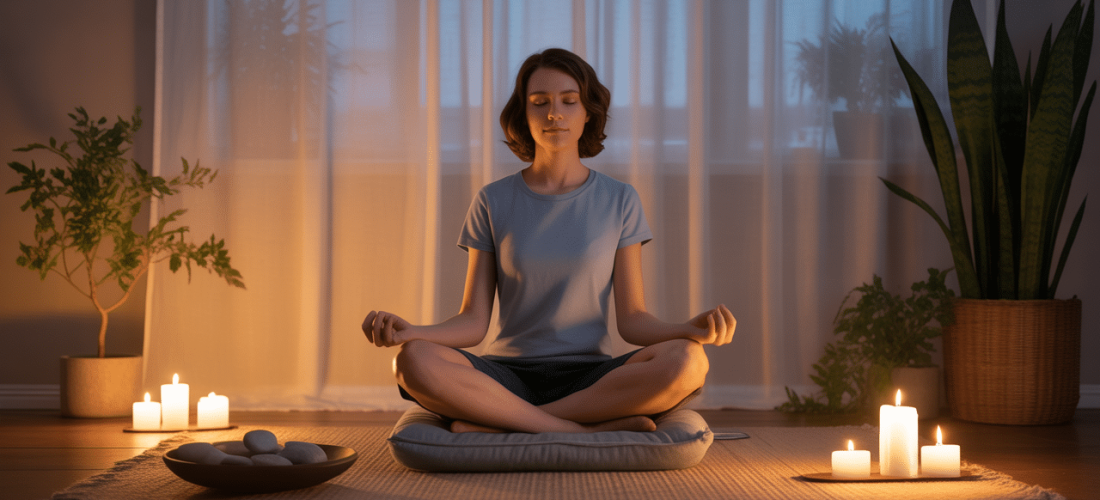
Integrating guided meditation into daily life may seem difficult, but with a few simple steps, it can become a rewarding routine. It all starts with creating a space dedicated to meditation, a place where one can retreat to focus on oneself. This place should be calming, conducive to relaxation and introspection.
It is also helpful to choose specific times of day for the practice. Whether in the morning, to set a positive intention, or in the evening, to release the day’s tensions, these moments become essential appointments with oneself. Using online resources, such as guided sessions, can also facilitate commitment to this routine.
As one practices more, it becomes easier to identify emotions and apply learned techniques in stressful daily situations. For example, during a difficult meeting, recalling conscious breathing can make all the difference. This is part of the learning process for healthy and balanced emotional management.
The path of guided meditation is a permanent journey, an exploration of oneself in all aspects. By committing to this practice, it becomes possible to feel connected not only to one’s own emotions but also to others and the world around us.
The Long-Term Benefits of Practice
The benefits of guided meditation for emotional grounding are not only revealed in the short term but extend over the long term. A regular practice makes it possible to better manage emotions, learn to face adversity, and cultivate a positive attitude. These skills are fundamental for living a more serene and fulfilling life.
Studies have shown that those who regularly practice some form of meditation experience a significant improvement in their overall well-being. These include a reduction in anxiety, better concentration, as well as an increase in resilience to life’s challenges. These elements are often reinforced by better self-awareness, essential for lasting inner balance.
Finally, the impact on interpersonal relationships should not be underestimated. By learning to better manage their emotions, communication with others becomes more authentic. This encourages deeper exchanges and genuine connection. Guided meditation thus becomes a vector for fulfillment not only individually but also relationally.