


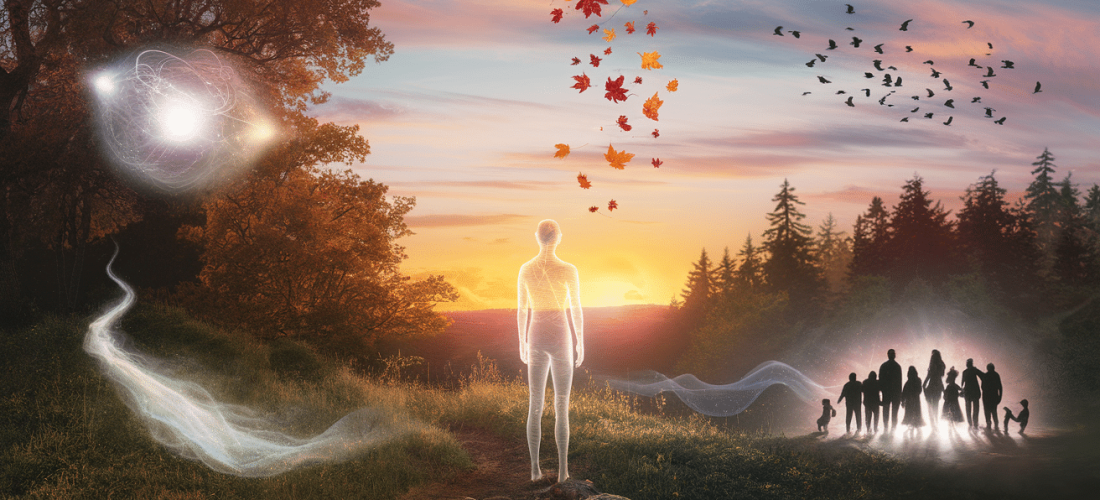
In a world where death is often seen as the inevitable end of life, beliefs and testimonies support the idea that our existence does not stop at physical death. The questions surrounding life after death have captivated the human imagination for millennia, and the quest for meaning persists tirelessly. How can we explain what happens after our heart has stopped beating? Here are five key elements that could illuminate this fascinating mystery.
Table of Contents
ToggleA spiritual connection to ancient civilizations
Ancient societies generally gave paramount importance to spirituality and the afterlife. Many cultures, such as those of the Egyptians, Greeks, or Mayans, developed complex rituals to ensure life after death. These practices reflect a deep belief in the immortality of the soul. For example, the Egyptians built vast pyramids and filled tombs with riches to accompany the deceased on their journey to the other world. This notion of a spiritual legacy is essential to understanding how human history has always sought to transcend mortality.
Cultural influences and ritual practices
Coming-of-age rituals found throughout the ages testify to the cultural connection between life, death, and spirituality. Here are some illustrative examples:
- Egyptian funeral rites: ornate burials and offerings for the journey into the afterlife.
- Day of the Dead in Mexico: a respectful celebration of the souls of the deceased, blending joy and remembrance.
- Sacrifices and offerings among the Greeks: to appease the gods and ensure the peace of the soul.
These traditions highlight the idea that death is not an end but rather a transformation. The core of the ceremonies often rested on the hope for a life enduring beyond human limits.
Reincarnation: an eternal cycle
Management of incarnations: reincarnation is presented as a concept widespread in many traditions, such as Hinduism and Buddhism. According to these philosophies, the human soul goes through a cycle of incarnations, learning and evolving through its successive lives. This reincarnation process offers a unique perspective to understand the trials of human existence: each life represents a step toward spiritual awakening.
Children’s testimonies and surprising stories
Stories of children clearly remembering their previous lives constitute an exciting proof. Throughout the world, reincarnation stories emerge, such as that of Ryan, a 10-year-old boy, who remembers specific details about his past life. These phenomena spark reflection and curiosity:
- Astonishing details: many children mention memories that only someone having lived those experiences could know.
- Historical texts: ancient manuscripts also mention these beliefs, reinforcing their relevance in human culture.
- Expert interventions: researchers examine these stories, seeking links between science and spirituality.
This recurrence of testimonies enriches the debate on what human existence really means and how souls continue to learn even after death.
Near-death experiences: an insight into the journey to the afterlife
Testimonies of near-death experiences (NDEs) provide a fascinating window into what life after death might be. These experiences are often described as transcendent, marked by feelings of peace, light, and connection. Over decades, thousands of people have reported sensations of floating, encounters with deceased loved ones, and even explorations of places of intense light.
The process of returning to life
NDE accounts highlight the passage between life and death. Here are some notable aspects often reported:
- Panoramic life review: many have mentioned revisiting key moments of their existence.
- Spiritual encounters: many speak of the presence of loved figures or protective entities.
- Feeling of unconditional love: a strong sensation that often awakens a personal transformation in those who return.
These testimonies, studied by specialists, have undergone thorough research, creating a bridge between spirituality and science.
Visions on the deathbed: a connection with the beyond
Many people on the verge of leaving this world report visions of light or deceased loved ones. These experiences, often described as comforting, raise many questions about the connection between the physical and spiritual worlds. For skeptics, these visions could be interpreted as hallucinations, but several studies refute this idea by demonstrating that they occur independently of medical circumstances.
Analysis of testimonies and studies
An exhaustive study carried out on 5000 cases of pre-death visions revealed surprising conclusions:
| Factors analyzed | Correlations | Main conclusions |
|---|---|---|
| Patient’s lifespan | No correlation with visions | Visions transcend age and illness. |
| Use of medication | No increase of visions with analgesics | Visions are not induced by medication. |
| Religious beliefs | Visions experienced by non-believers as well | Visions are not limited to a religious framework. |
Communication with the deceased: a persistent link
Experiences of communication with loved ones deceased long ago are among the most poignant. Speaking with those we have lost can bring immense comfort and transform the perspective on life and death. As a medium, experiences have shown that these exchanges are not limited to coincidences but testify to a deep and lasting spiritual bond.
Integrating spirituality into our daily lives
The ability to communicate with the beyond opens an enriching dimension in everyone’s life. Here are some points discussed around this persistent link:
- Spiritual awakening: seeking connection can lead to personal awakening and the discovery of one’s own intuitive abilities.
- Expansion of consciousness: communication with the deceased encourages deep reflection on the nature of existence.
- Emotional well-being: these exchanges can help overcome the suffering related to loss.
These experiences transcend time and space, reminding us that love and connection remain beyond physical life.


