


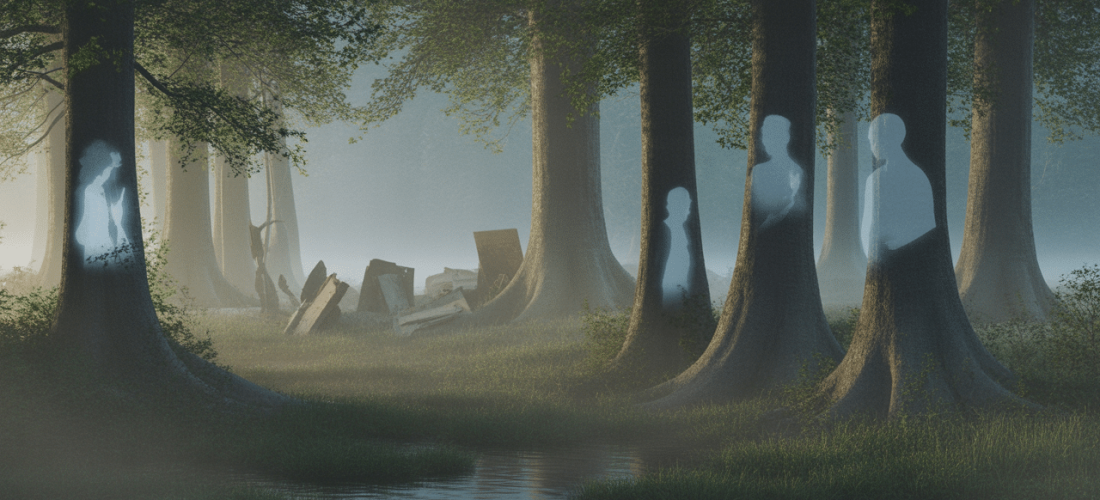
Past lives have always fascinated humanity, raising profound questions about our existence and our memory. Within this mystical universe, one subject stands out particularly: how is it that our memories of these past lives often remain so mysterious and, for some, completely inaccessible? From ancient spiritual traditions to contemporary research, the reasons that prevent memory from resurfacing transcend mere human curiosity. This article explores the Eclipsed Memories, revealing the buried secrets of Past Lives.
Table of Contents
ToggleDifferent perspectives on past lives
The question of past lives crosses various spiritual and philosophical streams. Some traditions, such as Hinduism and Buddhism, teach reincarnation, believing that the soul is eternal and reincarnates in different bodies throughout the ages. Other cultures, such as those of Native Americans or Egyptians, perceive this eternal memory as a continuity of human existence, linked to the relativity of time and experiences. Conversely, science, while interested in this phenomenon, adopts a more pragmatic and often skeptical approach. It relies on various studies, notably those on near-death experiences (NDEs) that have emerged over the decades.
Testimonies of past lives
There are a multitude of accounts, some with remarkable emotional intensity, of people claiming to remember their past lives. Psychoanalysts like Dr. Brian Weiss, who popularized regression therapy, have documented cases where individuals have been able to access precise details of their previous lives. These include names of places, historical events, and even emotions related to individuals they encountered in the past. These stories can be fascinating, but their truthfulness remains a subject of debate. They may evoke a certain skepticism, but also a deep reflection on the nature of consciousness.
- Hypnotic regression testimonies.
- Verifiable events in history.
- Emotional dimensions of memories.
It is important to note that these memories can manifest in different ways. Some people report vivid and recurring dreams that immerse them in scenes from their past lives. These echoes of time can generate complex emotions: fear, joy, or melancholy, each memory affecting the individual uniquely.
The psychological implications of reincarnation
The psychological implications of these memories are also numerous. The concept of karma, which links the actions of one life to the consequences of the next, is often underlying the teachings on past lives. This dynamic encourages reflection on life choices, personal journey, and taking responsibility. Psychologists suggest that this understanding of past lives could help create strategies for personal improvement, spiritual rebirth, and transformation.
A rich cultural context
Different cultures have their own interpretations of reincarnation and Forgotten Memories. In South America, for example, Andean traditions evoke cycles of life and death, where each existence is shaped by the one that precedes it. Memory rituals often allow channeling these ancient experiences, promoting a form of spiritual healing. In Japan, belief in past lives influences practices such as ancestor worship, anchoring collective memory at the heart of daily life.
| Country | Beliefs about past lives | Spiritual practices |
|---|---|---|
| India | Reincarnation through life cycles | Puja, meditation, yoga |
| Japan | Cycle of lives linked to ancestral memory | Ancestor worship, purification rituals |
| South America | Life and death cycle influenced by actions | Ceremonies and rites of passage |
Life experiences, both spiritual and material, are therefore deeply imbued with historical traditions. Whether menstrual rituals among indigenous peoples or spiritual reminiscences in major religions, understanding past lives is inseparable from our connection to humanity.
Why are memories of past lives inaccessible?
Mysteries of the past and limited access to memories of past lives raise a central question: why do these memories so often seem veiled? This inability to recall previous experiences could be linked to psychological, neurological, or even spiritual mechanisms. Psychologists and neuroscientists strive to explain how and why these memories escape our awareness.
The psychological mechanisms at play
A first explanation lies in how human memory functions. The human brain is a complex entity, and memories can be repressed for various reasons. The theory of repressed memories, for example, suggests that difficult or traumatic events can be suppressed in the unconscious. The same applies to memories of past lives that may reveal traumas or pains. Many people feel this as a psychological protection. Through this dynamic, individuals contribute to preserving their mental well-being.
- Psychological defense mechanism.
- Repression of traumatic memories.
- Limited access to the unconscious.
Moreover, the idea that certain memories are buried in our subconscious is widespread. Meditation or hypnosis practices can sometimes allow access to these hidden resources. However, the path to this type of emotional time travel may require proper guidance to avoid negative effects.
Neurological implications
Neurological research adds an additional dimension to understanding these Eclipsed Memories. These studies attempt to connect synapses and neuron functioning to memory and reincarnation. Neuroscientists explore the mechanisms by which the brain stores memories. Research on neural plasticity shows that life experiences can leave lasting imprints, but other factors, such as age, injuries, and illnesses, can affect access to these memories. Studies have also demonstrated how emotions play a key role in memory retrieval. These insights can offer a better understanding of the links between our past and our present existence.
The spiritual dimensions of forgetting
Spiritual perspectives can also shed interesting light on the phenomenon of forgetting past lives. In certain traditions, it is taught that access to revelations of the past requires spiritual purification or a heightened state of consciousness. This suggests that connection with past lives could be influenced by specific spiritual practices, such as meditation, chanting mantras, or using crystals. These practices aim to raise personal vibration and facilitate resonance with these hidden memories.
| Spiritual Practice | Objective | Impact on memory |
|---|---|---|
| Meditation | Connection with the unconscious | Access to buried memories |
| Mantra chanting | Elevation of vibrational frequency | Facilitates spiritual revelations |
| Use of crystals | Harmonization and purification | Opening to intuition |
Signs of a past life
In the quest to discover our past lives, there are common signs that may indicate an eternal memory anchored in our psyche. These signs, which may appear subtly or intensely, often guide individuals toward a deeper exploration of their history. Recognizing these signs can raise a whole range of questions about identity and spiritual heritage.
Recurring dreams
Dreams constitute a fascinating gateway to explore past lives. Distinct scenarios or familiar places may appear over time, often without apparent explanation. Some people also report sensations of urgency or distress in these dreams, evoking unresolved past events. These dream mechanisms are an invitation to question their origins and meaning.
- Familiar dream scenarios.
- Sensations of urgency or anxiety.
- Evoked unresolved events.
Dream work as a tool for personal development can thus allow salutary introspection, fostering dialogue between our current consciousness and unconscious experiences.
Unexplainable emotions and attachments
Some individuals experience unexplainable emotions, phobias, or attachments that seem difficult to justify. An uncontrollable fear of deep waters, for example, could have roots in a tragic event from a past life. Similarly, an attraction to a specific culture or era may suggest a deeper connection to previously lived experiences. These emotions can thus serve as valuable guides for those seeking to understand their spiritual heritage.
Physical signs
Sometimes, memories can also manifest physically. Birthmarks, scars, or unexplained illnesses may arouse curiosity about their origins. Testimonies even show that particular physical traits, such as birthmarks, could be associated with events from past lives. These discoveries, although languorously debated, attempt to link body and mind in the complex dance of human existence.
| Type of sign | Description | Example |
|---|---|---|
| Recurring dreams | Known scenarios without explanation | Dreams of an ancient battle |
| Unexplainable emotions | Strong fear or passion | Fear of water linked to a past accident |
| Physical signs | Body marks | Birthmark in the shape of a symbol |
Keys to accessing buried memories
So, how does one access these precious Eclipsed Memories? The key lies in personal commitment to a spiritual journey, integrated with introspective practices. Self-exploration and holistic methods can play a decisive role in this quest. To hell with obstacles, it is time to open the door to the unknown.
Meditation and introspection
Meditation is often considered one of the most powerful tools for accessing hidden memories. By focusing on the breath, calming the mind, and opening communication channels with the subconscious, many find the inner peace that allows them to explore their past. Regular meditation practice can also contribute to personal transformation leading to a spiritual rebirth.
- Developing a meditation routine.
- Keeping journals to track progress.
- Practicing mindfulness.
As practice intensifies, it becomes easier to couple these internal reflections with memories of past lives.
Hypnotic regression
Hypnotic regression is a popular method used to access memories of past lives. Guided by a qualified practitioner, this technique often helps participants bypass consciousness barriers, thus facilitating access to easily repressed memories. This therapeutic work can also lead to understanding recurring life patterns and unlearned lessons.
Diverse spiritual practices
Spiritual practices from different cultures can also enrich this research. Whether through shamanic rituals, breathing exercises, or even connecting with nature, each technique can help awaken memory. These practices, when integrated into a daily routine, promote openness to the transcendent experience of who we deeply are, highlighting the reincarnated knowledge that slumbers within us.
| Practice | Goal | Means of execution |
|---|---|---|
| Meditation | Accessing hidden memories | Focus on breath |
| Hypnosis | Unravel past experiences | Guided by a practitioner |
| Shamanic practices | Awakening ancestral memory | Specific rituals |


