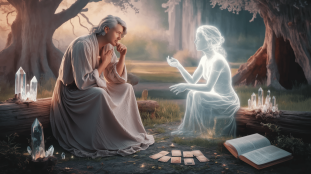
The mysteries of the afterlife have fascinated humanity for centuries. At the heart of these questions lies the idea of life after death, a journey on which the soul transforms and evolves through various spiritual dimensions. Stories, beliefs, and even the experiences of people who have come close to death feed speculation about what one might encounter beyond our earthly existence. Far from being an abstract subject, this theme is imbued with emotional depth, touching both our relationship to life, to death, and to those who have left us. The exploration of this post-mortem journey, passing through emblematic figures such as Charon, Ankou, or Osiris, reveals a world rich in symbolism and teachings. Who will you meet in the afterlife? This question feels like a moment suspended in time, inviting everyone to dive into their own reflections and expectations.
Table of Contents
ToggleSpiritual guides and psychopomps
Within spiritual traditions, psychopomps play a crucial role in guiding souls toward their final destination. This term, derived from the Greek “psyché” and “pompos” (which means “to lead”), refers to entities or mythological figures responsible for guiding the deceased into the afterlife. Among these figures, Hermes psychopomp stands out in Greek mythology, being the messenger of the gods, but above all, the guide of souls to Hades. His role is fundamental to ensure a peaceful transition, which relieves both those who leave and those who remain.
The different cultures and beliefs of psychopomps
With the cultural diversity of the world, psychopomps take on many forms and meanings. For example, in Celtic tradition, Ankou is often seen as a spectral figure, acting as the guardian of souls. In West Africa, the gods of the dead, called Guédé, are revered for their power to connect the world of the living and the dead. Each of these traditions expresses a deep respect for souls and their journey, emphasizing the importance of not abandoning them.
The solar barque of Osiris is another powerful representation of this spiritual crossing. In ancient Egypt, the soul traveled on this boat, facing trials before reaching the realm of the dead. This shows how much the passage to the afterlife is considered a complex process, requiring both spiritual guidance and a personal commitment from the soul. Here are some emblematic psychopomps:
- Hermes psychopomp (Greece)
- Ankou (Brittany)
- Guédé (West Africa)
- Osiris and the solar barque (Egypt)
- Yama (India)
It is essential to understand that these figures are not there to judge or punish. Their mission is to offer a reassuring bridge for souls, leading them to the afterlife with kindness. This dimension also eases those who, on Earth, are grieving. The presence of psychopomps reminds us that death is not an end, but rather a stage in a spiritual journey. The many stories shared by those who have had near-death experiences (NDEs) often testify to a light, peace, and reassuring presence, evoking these benevolent guides.
The mythological incarnations of death
Death has often been personified throughout the ages, across different cultures, bringing varied and enriching visions of what the passage to the afterlife represents. This theme is omnipresent in mythology, each culture developing its own fields of interpretation around death. For example, in Norse mythology, the Valkyries are divine warrior women who choose who dies and who lives during battles. In their image, they honor the sacrificed life while opening the way to a new existence in Valhalla.
Death in different cultures
Each culture has its own reflection of death. For example:
| Country | God or figure of death | Role and symbolism |
|---|---|---|
| Greece | Thanatos | The personification of death, often showing a peaceful image. |
| Mesoamerica | La Catrina | Symbol of death, used in Day of the Dead celebrations. |
| India | Yama | God of death, guides souls toward reincarnation. |
These incarnations go far beyond dread. They seek to provide an understanding of the cycles of life and death, through rites and celebrations that honor the deceased. Knowledge of these mythologies helps to develop a calmer view of death, to perceive it as a natural and inevitable element of the cycle of existence.
Messages from the afterlife: beyond limits
Many people claim to have received messages from their deceased loved ones, signs or evidence proving that love transcends physical contact. This rekindles hope and gives a tangible dimension to spirituality, especially for those in mourning. Communication with the dead is not limited to rituals or esoteric practices. Signs can occur in subtle and unexpected ways, through symbols, dreams, or significant events.
Forms of communication with the afterlife
Here are some examples of these forms of communication:
- DREAMS: Dreams can serve as a bridge to messages from the deceased, often offering unexpected comfort.
- SYMBOLS: Familiar objects or natural signs may appear, acting as reminders of eternal connection.
- TECHNOLOGY: Some report spontaneous evocations through electronic devices at the time of their mourning.
Studies indicate that these experiences can have a significant impact on emotional healing. People who have lived through such manifestations are often better able to grieve and find peace. This phenomenon touches on the question of mind and body, concepts often seen as opposed but that come together in understanding the afterlife. Communication with the afterlife can help soothe a broken heart, restoring an unalterable bond of love, regardless of the distance of the material world.
Realities of the afterlife according to spiritual traditions
Spiritual and religious traditions offer various visions of the afterlife, often tinged with beliefs about reincarnation, paradise, hell, or other dimensions of existence. Each of these visions provides insight into the expectations and teachings that believers maintain to answer their questions about death and the afterlife.
Different conceptions of the afterlife
It is possible to distinguish several perceptions of the afterlife, through these examples:
| Religion / Spirituality | Conception of the afterlife | Consequences of earthly actions |
|---|---|---|
| Christianity | Heaven and hell, a judgment after death. | Faith and actions will determine the outcome. |
| Buddhism | Reincarnation in a cycle until reaching enlightenment. | Actions in this life influence future lives. |
| Modern spirituality | Plurality of dimensions, each soul has a unique path. | Choices influence spiritual progression. |
These beliefs are not merely theoretical; they deeply influence individuals’ behavior during their current life. They create an ethics and a sense of responsibility that transcends the borders of the physical world. In this sense, each tradition invites each soul to explore and embrace its own journey, like the eternal figures found in their spiritual series.