


Table of Contents
ToggleWhat happens to the souls of criminals and malevolent individuals after their death?
From one culture to another, the idea of the afterlife is often tinged by the moral and ethical values of society. The souls of criminals and malevolent persons are often perceived through a lens of retribution and punishment. Thus, various beliefs exist about what happens to these souls after death. For some traditions, these souls go through a Final Judgment where they must answer for their actions. This crucial moment determines their destination, whether it be luminous or dark.
In many religions, the concept of reincarnation is also omnipresent. The tormented souls of criminals may be offered a new chance for purification through new lives, trying to make amends for their past mistakes. For example, in certain Buddhist views, a soul having committed malevolent acts may be reborn in precarious conditions, thus allowing reflection on past actions.
Thus, the mysteries of the Beyond fascinate and unsettle. Accounts of criminals who have had near-death experiences often report shifting visions of an ethereal world, where they are confronted with their deeds in harsh light. This echoes the idea of eternal penance, where the soul must undergo an intense emotional and spiritual process before finally finding peace.
It is interesting to note that each culture has its own interpretations of these notions. For example, in Egyptian mythology, the Final Judgment of the soul took place before the tribunal of Osiris, where the hearts of the deceased were weighed. A heart heavy with sins signaled the end of existence in Eternity, sending the soul toward its infernal destination.
In other traditions, such as Christianity, sin and repentance take on a fundamental aspect. The souls of criminals, depending on their moments of vulnerability, may benefit from redemption, but the nature of their guilt remains for eternity. These variations testify to the complex interpretations around good and evil, often escaping the extreme situations of lost souls.
| Belief | Destination after death | Penance |
|---|---|---|
| Buddhism | Reincarnation under precarious conditions | Learning through new lives |
| Christianity | Heaven, hell, or purgatory | Possibility of redemption through repentance |
| Egyptian Mythology | Eternity or condemnation | Weighing of the heart before Osiris |
Paths of the Beyond: between judgment and redemption
The path that souls take after death is often filled with symbolism and myths. The passage to the beyond is rarely linear and is influenced by actions taken during life. The concept of the Path of Shadows evokes the idea of an intermediate space where souls await their judgment. Some traditions suggest that this is where the souls of wrongdoers find themselves, confronted with their conscience.
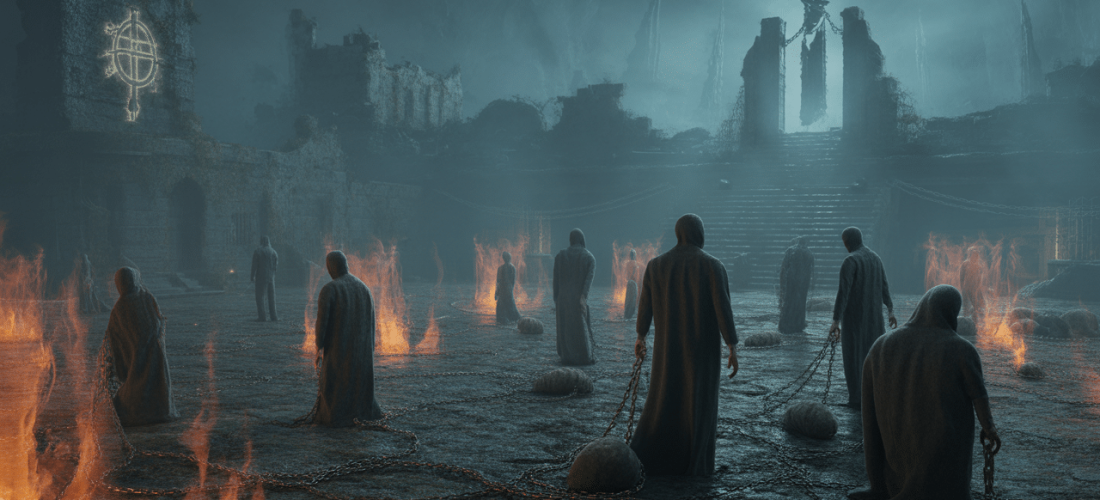
The story of tormented souls tells that some are so chained by their deeds that they find no rest. Tales of wandering spirits, unable to free themselves from their past, describe ongoing struggles, both internal and external. This phenomenon raises the question: does the soul have the ability to free itself from its own demons, or is it condemned to eternal penance?
There are also moments when punishment can turn into an opportunity for redemption. In some spiritual traditions, a criminal soul may be guided by benevolent spirits in a process of healing and reflection. This generally involves facing one’s mistakes and understanding the pain inflicted on others. Such an approach is often found in Eastern philosophies, where self-observation and meditation can lead to light for the suffering soul.
The Judges of the Beyond, as described in ancient accounts, are often regarded as entities who evaluate and decide the fate of souls. Their judgments rely not only on acts but also on the intention behind those actions. Malevolent souls who show genuine remorse and a desire for change may escape a dark destiny.
- Suffering of lost souls
- Potential redemption
- Spiritual guidance
- Healing process through faith
Explorations and testimonies about the criminals’ Beyond
Testimonies from people who have had near-death experiences shed fascinating light on the fate of souls. Many anecdotes shared by individuals who crossed this threshold reveal encounters with spiritual entities. For some, these meetings are marked by visions of light, while others report confrontations with manifestations of their past.
These accounts have sparked the interest of researchers exploring the spiritual dimensions of human existence. The experiences of lost souls, illustrating their struggles, are often compared to biblical stories of repentance and redemption. Psychologist Michael Newton, in his work on souls, describes cases where criminals, after experiencing death, had the opportunity to reflect on their lives. Many testimonies confirm the possibility of reincarnation, but with an acquired understanding of the suffering caused to others.
These stories reveal an exciting dynamic, suggesting that even in an apparently painful beyond, the possibility of learning and spiritual growth remains. The path of souls is marked by opportunities for evolution, even for those who have taken dark paths.
There are also frightening tales of souls who, until now, have not found rest. These continue to haunt places where their malevolent acts took place. Stories of “tormented souls” reveal profound truths about human nature, the need for reconciliation and love. These tales are often used to emphasize the importance of compassion and forgiveness in our daily lives.
| Testimony | Experience | Lessons learned |
|---|---|---|
| Michael Newton | Account of souls in introspection after death | Insight into their consequences on others |
| NDE Patients | Encounter with benevolent entities | Opportunity for redemption |
| Tormented spirits | Repeated errors in the beyond | Need to find peace |
Teachings of lost souls: good and evil in the Beyond
The stories of the souls of criminals and malevolent individuals raise profound questions about the nature of good and evil. What lessons can be drawn from their experiences? Whether these souls have found rest or not, their tales often reveal the inherent consequences of our actions during life.
Through these stories, one discovers a range of human emotions: guilt, sorrow, hope, and redemption. Whether it is the suffering of a criminal aware of the pain caused or a desperate soul seeking light, these examples illustrate the complexity of the human experience and the importance of compassion.
The paths of the damned are not systematically strewn with eternal torments. On the contrary, many testimonies highlight that the path to healing and reconciliation can begin even in the beyond. Actions of a life can resurface with piercing clarity, but the potential for growth remains alive.
Stories of tormented souls remind us that every life is precious and that every act counts. Sometimes, love and pain intertwined can lead to unexpected paths toward redemption. By becoming aware of this, society can encourage bridges between punishment and redemption, rather than seeing them as opposing paths.
- Importance of self-reflection
- Role of compassion in our lives
- Interactions between spirit and body
- Fascination with human complexity


